:quality(80))
:quality(80))
:quality(80))

How can we help you?
)
craftworks GmbH
Schottenfeldgasse 20/6a
1070 Vienna
From chatbots to autonomous co-workers: how Agentic AI is transforming decision-making in industry.
:quality(80))
Know-How
reading time: 9 min
Clemens Heistracher
:quality(80))
ChatGPT works remarkably well, it can explain complex concepts, draft reports, and even support analytical workflows. The key question for many industrial organizations is how to put AI into practical use. How do we turn AI from a conversation partner into a problem solver, in manufacturing, logistics, or energy management?
ChatGPT and similar tools are virtual assistants, they excel at reasoning and generating insights. Yet, industrial environments need more than conversation. They need systems that can act without human intervention, make goal-directed decisions, and continuously adapt to changing conditions. In summary, industrial operations require Agentic AI to achieve autonomous, adaptive decision-making.
This article explains what Agentic AI is and how it builds on chatbots to take the next step in automation. You will also see how craftworks uses it to solve real industrial problems. These include predictive maintenance, process optimization, and energy management. You will learn how new advances, like the Model Context Protocol (MCP), allow AI agents to turn text into real actions.
By the end, you will understand how Agentic AI can change today’s fixed workflows into smart, flexible systems. You will also see where you can start using it in your own work.
An AI agent is a system that can understand its environment and make decisions to reach a goal. It can also act on its own, but always within safe and defined limits. Traditional automation follows fixed rules. In contrast, an AI agent can understand context, plan its next steps, and adapt when conditions change.
Anthropic explains in their guide that an agent's strength comes from its ability to reason, plan, and use tools. This helps the agent achieve goals safely and reliably.
Key characteristics of AI agents include:
Goal-oriented behavior: Agents pursue defined outcomes rather than following step-by-step scripts.
Autonomous decision-making: They can select and execute actions within safe boundaries.
Adaptability: Agents learn from data and adjust their behavior to changing conditions.
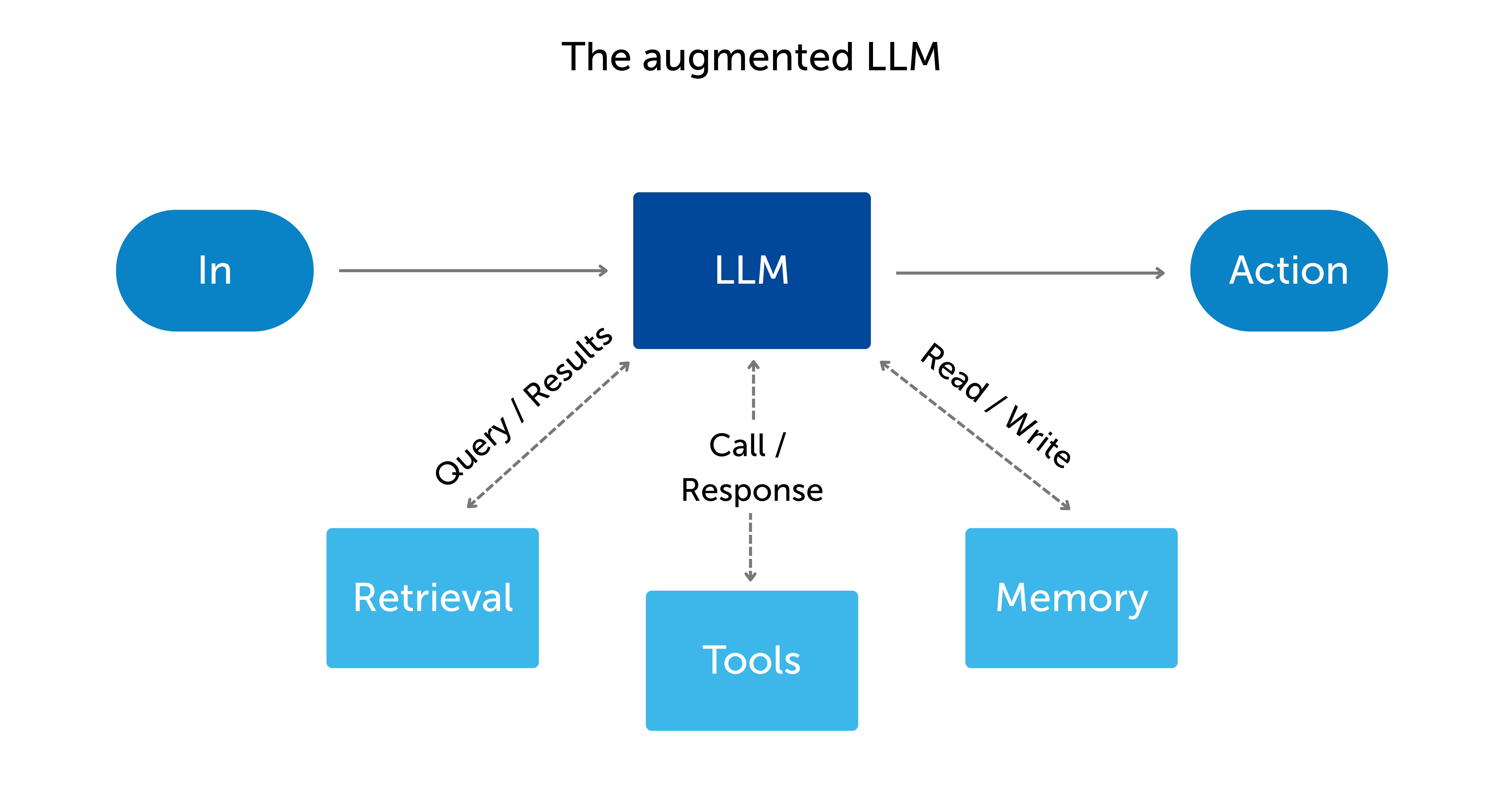 AWS explains that AI agents improve automation. They add reasoning and adaptability. This helps them make smart decisions in complex, data-driven situations.
At craftworks, we believe AI agents do not replace human workers. AI agents serve as intelligent collaborators, supporting decision-making and routine tasks. They handle routine decisions, surface valuable insights, and free people to focus on creative or strategic tasks.
A single AI agent can handle useful tasks on its own. The real power appears when multiple agents work together in structured workflows.
An agent is an individual decision-maker. Each agent can have a custom objective, specific inputs, and a set of tools it can use to achieve its goals.
An agentic workflow is a coordinated process where agents interact with data, tools, and humans to achieve complex goals.
For example, craftworks developed an AI Agent for a production environment:
A monitoring agent detects deviations in machine performance using sensor data.
A diagnostic agent investigates likely causes by comparing live data to previous incident reports, manufacturer documentation or digital twins simulations.
A planning agent manages the maintenance schedule and informs technicians only if human action is necessary.
An optimization agent adjusts operating parameters to stabilize performance.
Each agent works on its own but remains aligned to the plant’s overall efficiency goals. As conditions change, such as shifts in demand, equipment wear, or energy costs, the workflow adjusts itself automatically. This ensures consistent performance without any manual intervention.
 In essence, agentic workflows turn static automation into living systems that can reason, coordinate, and evolve, enabling industries to move from reactive operations to proactive, autonomous management.
For agentic workflows to function in the real world, agents need more than intelligence, they need access. One of the most important breakthroughs in Agentic AI is the Model Context Protocol (MCP). This new open standard allows agents to safely and efficiently access tools, APIs, and data sources.
MCP defines how models can understand, request, and use external information without exposing sensitive systems or compromising control. The MCP connects an LLM’s reasoning abilities with the real-world actions required for operational tasks.
For our agents, this means an agent can:
Query production databases
Retrieve sensor data
Or trigger a workflow in an Enterprise Resource Planning or Manufacturing Execution System, all securely and transparently
By standardizing tool access, MCP makes it far easier to integrate Agentic AI into existing IT and OT infrastructures.
However, access alone isn’t enough. Agents also need to collaborate. That’s where A2A (Agent-to-Agent Protocol) comes in.
A2A is an open protocol enabling communication and interoperability between different agentic applications. While MCP focuses on secure agent-to-system interaction, A2A focuses on agent-to-agent interaction, allowing autonomous systems from different vendors or environments to exchange messages, negotiate, and cooperate directly.
Together, MCP and A2A form the foundation for true agentic ecosystems, where intelligent agents can not only access and act on the world, but also coordinate and collaborate with each other.
Until recently, large language models (LLMs) were powerful but limited to conversation. They couldn’t reliably reason through multi-step problems or interact safely with operational systems.
Recent advances in reasoning models have made a difference, according to the OpenCUI’s article. Agents can now move from theory to real-world use.
Three major developments made this possible:
Stronger reasoning models: AI systems like GPT-4 and Google’s Gemini can plan, reflect, and solve complex, multi-step tasks.
Standardized tool access: Frameworks like MCP, LangGraph, and Spring AI enable agents to use APIs and software systems automatically.
Better data integration: Industrial data platforms, digital twins, and IoT systems now provide rich, structured data. AI agents can use this data to act autonomously and make informed decisions.
These advances collectively turn LLMs from passive text generators into active decision-makers that can interact with their environment.
Agents monitor equipment data, detect early signs of failure, and automatically schedule inspections or order spare parts.
Impact: Reduced unplanned downtime and optimized maintenance costs.
When a quality deviation or process interruption occurs, agents can compile data, identify root causes, and suggest corrective actions.
Impact: Faster response times and data-driven problem resolution.
Agents continuously analyze process parameters and dynamically tune them to maximize efficiency or product quality.
Impact: Increased yield and reduced energy consumption.
Agents detect anomalies in production data, compare results to past defects, and propose countermeasures.
Impact: Early defect prevention and consistent output quality.
Agents coordinate energy-intensive processes across machines to minimize peak loads and optimize usage.
Impact: Lower energy bills and improved sustainability metrics.
Each of these applications builds on existing data infrastructure. The real innovation is autonomous decision-making, which bridges the gap between analytics and action.
Agentic AI is changing the game in industry. Unlike traditional automation or chatbots, AI agents can perceive, make decisions, and act on their own. They adapt to changing conditions and drive real outcomes. AI agents turn insights into action across manufacturing, quality, and energy operations, faster and more reliably than ever before.
“Think about which decisions in your processes could be safely automated with an agent.”
The next generation of industrial AI will move beyond answering questions to driving real outcomes. Start small, experiment with a pilot workflow, and discover how Agentic AI can become your intelligent, adaptive co-worker.
Are you ready to unlock the potential of Agentic AI in your operations? Contact us today to explore how craftworks can help your team achieve real-world impact with Agentic AI.
:quality(80))